Rooftop Solar System in Bangladesh
Last updated:
A rooftop solar system in Bangladesh is a solar PV plant mounted on the roof of a factory, warehouse, commercial or residential building, turning unused roof space into a source of electricity. A safe installation needs a structural check of the roof, a mounting system suited to RCC or metal sheet, wind-load design, waterproofing and fire access paths.
Part of our Solar Systems in Bangladesh.
In a crowded country where land is expensive, roofs are the most practical place for solar in Bangladesh. Factory sheds, warehouses, shopping centres, hospitals and apartment buildings all have roof areas that do nothing except shed rain. Putting that area to work can cut daytime grid purchases, but a roof was rarely designed with solar in mind, so the project is as much a structural and safety exercise as an electrical one.
Veritas Technologies Ltd plans and installs rooftop solar with structural, electrical and fire safety engineers working together. The plant is usually connected as an on-grid solar system, and where surplus export is worthwhile it can be registered as a net metering solar system. This page focuses on what is specific to the roof.
What Is a Rooftop Solar System?
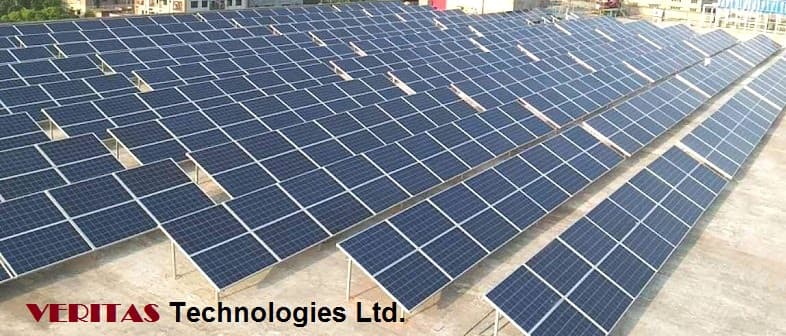
A rooftop solar system is a photovoltaic installation whose modules, mounting structure and often inverters are placed on a building's roof. The electrical design is similar to any grid-connected plant; what makes it different is the interface with the building: the extra load on the roof structure, the way the frame is fixed or ballasted, the effect on waterproofing, wind forces on the panels, and the need to keep access for maintenance and firefighting.
Which Buildings Suit Rooftop Solar?
- RMG, textile and other factories with large flat or shed roofs and heavy daytime loads.
- Warehouses and logistics centres, which often have more roof than they need electricity for.
- Commercial buildings, shopping centres, hotels and office blocks.
- Hospitals, clinics, schools and universities.
- Residential and apartment buildings, where a shared array can supply common loads such as lifts, water pumps and stair lighting.
Roofs with frequent heavy equipment such as cooling towers, water tanks, chillers or exhaust fans can still host solar, but usable area shrinks and shading from these items must be modelled.
Why Must the Roof Structure Be Checked First?
A solar array looks light, but it adds permanent dead load from modules and frames, extra load from ballast blocks on flat roofs, and, most critically, wind forces that try to lift or slide the array. An RCC slab designed decades ago for a light roof finish, or a steel shed with slender purlins, may not have spare capacity. Cracked slabs, corroded rebar, rusted purlins or loose roof sheets are warning signs that need engineering attention before installation.
We check the roof using available drawings and a site inspection, and where the existing condition is uncertain we recommend a full structural safety assessment. If strengthening is needed, our structural design team prepares the details so the roof and the solar plant are designed together.
Wind loads and BNBC 2020
BNBC 2020 sets out how wind loads on buildings and their components are calculated, with basic wind speeds that vary by location and are higher towards the coast. Solar arrays on roofs experience uplift and drag, with the strongest forces near roof edges and corners. Mounting frames, fixings, ballast and the roof members that support them should be checked against these provisions, particularly for sites in cyclone-prone coastal districts.
RCC Roof vs Metal Sheet Roof: How Does Installation Differ?
| Aspect | RCC (concrete) roof | Metal sheet roof |
|---|---|---|
| Typical buildings | Multi-storey factories, offices, hospitals, apartments | Factory sheds, warehouses, pre-engineered steel buildings |
| Mounting method | Tilted steel or aluminium frames, ballasted or anchored to the slab | Rails on seam clamps or brackets fixed to purlins, usually following the roof slope |
| Tilt and orientation | Chosen freely for yield and row spacing | Usually follows the existing roof pitch and direction |
| Main structural concern | Slab capacity for frame and ballast load; anchor pull-out | Purlin and sheet capacity under wind uplift |
| Waterproofing risk | At anchor points and frame bases on the waterproof layer | At any fastener through the sheet; avoided with seam clamps |
| Maintenance access | Generally easy walkways between rows | Requires designated walkways and fall protection |
| Cooling of modules | Good airflow under tilted rows | Less airflow; modules may run hotter |
How Are Orientation, Tilt and Shading Planned?
Bangladesh lies in the northern hemisphere, so modules facing broadly south collect the most energy over a year. On flat RCC roofs, the tilt and the gap between rows are chosen together: steeper tilt can raise yield per module but needs wider spacing to avoid rows shading each other in the low winter sun, and it increases wind load. On sloped metal roofs modules generally lie parallel to the sheets, and east- or west-facing slopes still produce well, simply peaking earlier or later in the day.
Shading has an outsized effect. A shadow over part of a string can cut that string's output far more than the shaded area suggests. Parapets, stair and lift rooms, water tanks, telecom masts, neighbouring buildings and trees are all mapped during the survey, and the layout is arranged to keep their shadows off the array during the productive hours.
What Fire Safety Measures Apply to Rooftop Solar?
A rooftop array carries DC voltages that remain live whenever there is daylight, even when the main supply is switched off. For that reason fire safety is part of the design, not an afterthought. Good practice includes:
- Clear access paths and setbacks around and through the array so firefighters and maintenance staff can move safely.
- Keeping roof exits, smoke vents and fire-fighting equipment unobstructed.
- DC isolators at accessible points and clear labelling of all solar circuits.
- Correct cable support and protection to prevent insulation damage and arcing.
- Matched, properly crimped DC connectors to avoid hot joints.
- Coordination with the building's fire safety plan and lightning protection system.
Where a factory is under buyer or regulatory fire safety scrutiny, the solar layout should be reviewed alongside the fire safety assessment.
How Is a Rooftop Solar System Installed? Step-by-Step
- Review of bills, load profile and project goals.
- Roof survey: area, condition, access, shading obstacles and route to the electrical room.
- Structural check of the roof against the proposed array, with strengthening design if required.
- Layout design: array arrangement, tilt, row spacing, walkways and fire access paths.
- Mounting design for RCC or metal sheet roof, including wind-load and waterproofing details.
- Electrical design: strings, inverters, protection, earthing and connection point.
- Installation by trained teams using fall protection and safe lifting methods.
- Waterproofing inspection of all fixings and bases.
- Testing and commissioning in line with IEC 62446, then handover.
What Do You Receive?
- Roof survey and shading report.
- Structural check summary and, where needed, strengthening drawings.
- Array layout with walkways and fire access marked.
- Mounting design and fixing details.
- Electrical single-line diagram and protection schedule.
- Commissioning test records, equipment warranties and an O&M manual.
Rooftop Solar for RMG Factories and Buyer Sustainability Programmes
Many international brands that source from Bangladesh ask their suppliers to report energy use and greenhouse gas emissions, and some encourage on-site renewable energy as part of their supplier sustainability programmes. A well-documented rooftop solar plant gives a factory measured generation data to report, alongside lower grid purchases. It is worth pairing solar with efficiency work, because reducing waste in compressors, lighting and motors lowers the load the solar plant has to offset.
How Should Rooftop Solar Be Maintained?
Dust is the main enemy of rooftop solar in Bangladesh. Roofs near busy roads, construction sites, brick kilns or textile operations collect a film of dust that steadily lowers output, especially in the dry months. Cleaning with clean water and soft brushes, from safe walkways, restores most of the loss. Avoid harsh detergents, abrasive pads and walking on modules.
A complete O&M plan also covers monthly review of generation data, inspection of fixings and ballast after storms, checks of roof waterproofing around bases, inspection of cables and connectors, testing of isolators and surge protection devices, earth resistance tests and periodic thermographic scans for hot spots.
What Does a Rooftop Solar System Cost in Bangladesh?
Cost depends on capacity, equipment choice, roof type, mounting method, building height and access, any structural strengthening or waterproofing, cable routes to the electrical room and the protection and earthing scope. We provide a written proposal after a roof survey rather than a generic rate.
Frequently Asked Questions
Can every roof take a rooftop solar system?
No. A rooftop solar system adds permanent dead load and, more importantly, wind uplift and suction forces. Older RCC slabs, roofs with cracks or corrosion, and light metal sheds with slender purlins may need checking or strengthening first. A structural assessment of the slab or roof frame should come before the system is sized, not after the panels arrive.
Is rooftop solar suitable for RMG factories in Bangladesh?
Often, yes. RMG and textile factories usually have large roofs and heavy daytime loads, so most of the solar output is used on site. Many international buyers also ask suppliers about renewable energy and emissions in their sustainability programmes. The key checks are roof structure, shading from utilities on the roof, fire access and the condition of the factory's electrical installation.
Will installing solar panels cause roof leaks?
It should not, if the mounting is designed properly. On RCC roofs, ballasted or bolted frames need correct waterproofing details at every penetration or base. On metal sheet roofs, seam clamps that grip the profile avoid drilling through the sheet altogether, and where fixing through the sheet is unavoidable, sealed fasteners on the crest are used. Poor detailing is the usual cause of leaks.
What tilt and orientation are best for rooftop solar in Bangladesh?
In Bangladesh, modules facing broadly south with a moderate tilt give strong annual yield. On flat RCC roofs a tilt is chosen to balance yield, row spacing and wind load. On metal sheet roofs modules usually follow the roof slope, so east and west faces still produce useful energy, just with a different daily profile. A shading and yield study confirms the best layout.
How often should rooftop solar panels be cleaned?
It depends on the site. Roofs near roads, construction, cement or textile dust, or coastal salt need more frequent cleaning than those in cleaner areas, and the dry season is usually worse than the monsoon. Watching generation data is the best guide: when output drops compared with clear-sky expectations, cleaning is due. Use clean water and soft tools only.
Can a rooftop solar system be connected under net metering?
Yes. A rooftop solar system connected to the grid can apply for net metering through the distribution utility, subject to the government's Net Metering Guideline. The guideline sets eligibility, capacity limits relative to the sanctioned load and the billing method. The roof plant itself is designed the same way; net metering mainly changes the meter and the billing arrangement.
Request a Rooftop Solar Survey
Send us roof photographs or drawings, the building's age and use, and recent electricity bills. Our engineers will arrange a roof survey and structural check.
- Phone: 01705 402 222, 01705 402 200, 01705 402 201 (Tel: +8802 4811 2756)
- Email: info@veritas.com.bd
- Dhaka office: APON Heights, 27/1/B, Road#03, Shyamoli, Dhaka-1207, Bangladesh
- Chittagong office: 553, DC Road, Haji Ashraf Ali Market Kadamtali, Chittagong, Bangladesh
- Office hours: Saturday to Thursday, 09:00 AM to 05:00 PM
Or send your enquiry through our contact page.